A Chat With Alessia Piermarini About “Zagani Lullaby”

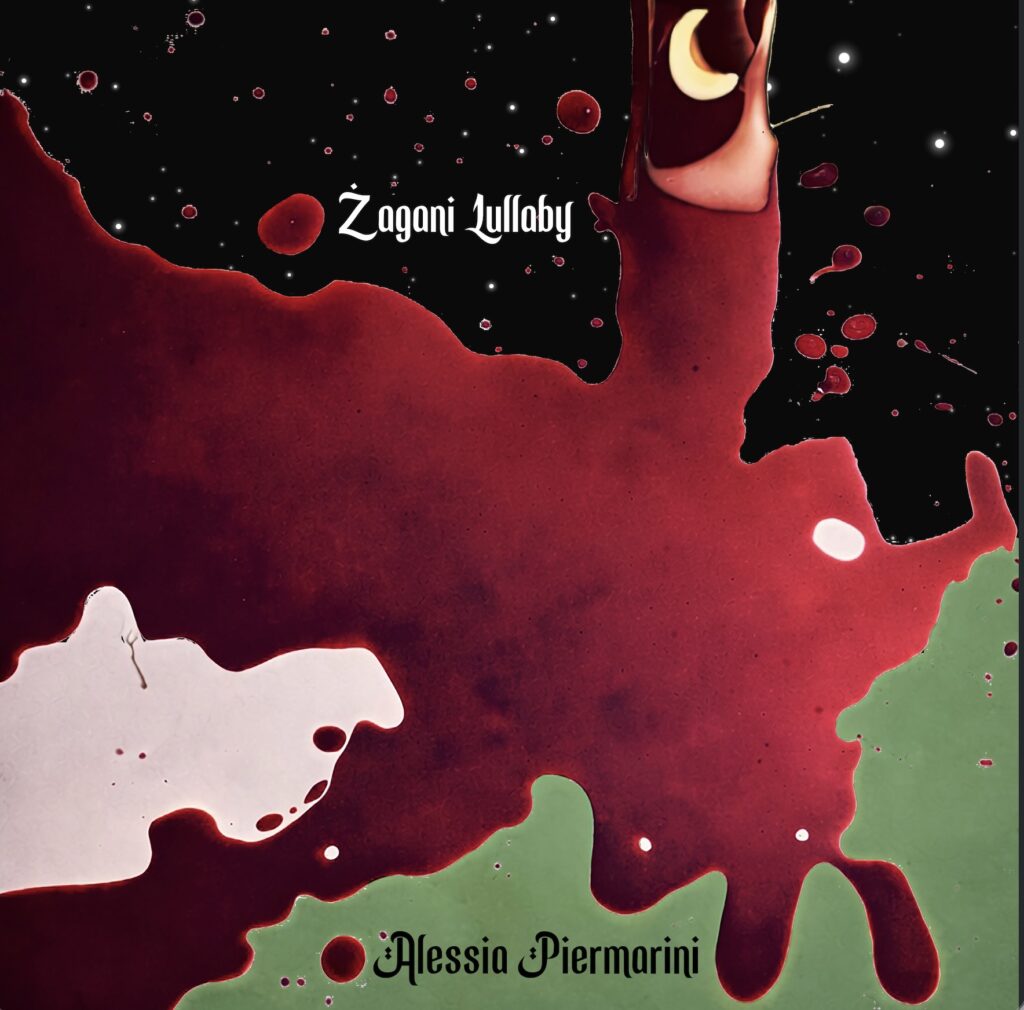
Alessia Piermarini is a singer-songwriter and pianist working between London and Italy, and her new single “Zagani Lullaby” is worth your time. Her sound pulls from Jazz, Hip Hop, and Nu Soul, and the arrangements are minimal in a way that works. Nothing is overdone. Piano, violin, and vocal harmonies carry the track, and the team behind it, arranger Emilio Merone and violinist Aliyah Serena, did solid work here.
Q: Hi! “Zagani Lullaby” started as a response to what was happening in Palestine, but you’ve said it grew into something wider. Can you talk about that shift — when did you realize the song had outgrown its original frame?
A: So much more abuse, violence and oppression is happening right now all over the world that it feels like the track is not about only the people who tragically inspired it in the first place, the Palestinians, anymore but it spread its message further: the song is about all people and in particular mothers who have lost their children, who are being displaced, oppressed, killed, discriminated.
The song sings to our neighbours who are suffering the horror of war.
Q: The title is striking. What does “Zagani” mean to you, and why pair that word with “Lullaby”?
A: Zagani can be anywhere. It’s a place where mothers can’t keep their children safe. Zagani is where a mother is singing her child to sleep while in the background everything is falling apart. While the bombings won’t stop.
Q: Your previous single 10 Miles was built entirely from layered voices and percussion — no other instruments. Here you brought in piano, violin, harmony. What made you want to add that texture for this one?
A: 10 Miles is a loop experiment where I’ve been overlapping vocals and percussion. Zagani Lullaby was composed on piano so I kept it that way even when the arrangement was created. The core of the track is piano and vocals. Raw and minimal.
Q: Both tracks deal with civilians in conflict zones, but they feel like very different emotional states. How would you describe the relationship between the two songs — do they talk to each other?
A: Both tracks found their inspiration in the situation in Gaza.
10 Miles was written right after watching the Palestinians walk back home to North Gaza for 10 Miles while the cameras were filming them: they had smiles on their faces. It was January 2025. Zagani Lullaby was the result of an exploration: I had started diving deeper in Arabic harmonies and scales and atmosphere, process that had already started in 10 Miles.
Q: 10 Miles was picked up by BBC Introducing. Did that change anything about how you approached writing and releasing Zagani Lullaby, or did you try to block that out?
A: When BBC Introducing featured 10 Miles the other track was already written and ready to be released. Zagani Lullaby had a very quick composition time. It was finished in a couple of days. It came more quickly than any other songs I’ve ever written. It came like a vision: chord progression, melody, a harmony line, lyrics, the visual idea, almost all of it at the same time.
Q: Live, you perform this solo with a loop machine, and also with a full band. Those must feel like two completely different shows. Which version do you feel closer to right now?
A: These two new tracks have a strong core so I feel their message gets through to the audience no matter the set up. I haven’t performed live with a full band yet: I will let you know!
Q: You work between London and Italy. Does that back-and-forth affect how this music comes out — the language you reach for, the sounds you gravitate toward?
A: I believe it does. Since an early age, I’ve always written in both languages, English and Italian, my mother tongue. I feel very strongly about my roots but London has been my home for 12 years. And now a new language has joined in: the 10 Miles chorus is in Arabic!
Q: There’s a tension in the project between something minimal and something that builds into real intensity. Is that something you’re consciously constructing, or does it just happen in the room?
A: Glad you could feel that. It means the song reached its intention. I’d say it’s both: the tension needs to be there as there’s a striking contrast between the sweetness of a mother singing a lullaby to her child and war in the background.
I wanted to create a tension building up feeling by both melody and harmonies. When pianist and composer Emilio Merone created the strings arrangement and singer Gianluca De Martini joined in with harmonies, the song gained even more tension so to reach its climax in the pre-chorus
Q: Writing music about ongoing conflict is a specific kind of pressure. How do you protect the song from becoming a statement at the expense of being an actual piece of music?
A: I don’t need to protect the song. People around me have been worried about exposing myself and the music to a big and delicate topic. I keep believing in humanity and in peace. I’m an artist and I strongly believe in the power of the microphone. If we can’t express ourselves we’re already dead. I don’t need to hide behind the song and the song doesn’t need to hide its message. The song is about humanity through inhumanity. It’s about finding peace during war.
Q: You’ve framed this as a two-part project. Is it definitively closed now, or does it feel like it’s still pulling at you?
A: I found it quite interesting exploring a complete unknown harmonic world and using notes and sounds borrowed from the Arabic music traditions and its language. I had never tried that before. Feeling not at ease felt right. I felt comfortable throwing myself into harmonies I wasn’t able to fully grasp because that also reflects the current situation the world is facing. Uncertainty. Discomfort. Imbalance. But at the end all came together. This is the farthest I’ve gone from my usual music world, made of more Jazz/Blues/Nu Soul/Hip hop vibes.
Q: What does the rest of 2026 look like for you — are you touring, recording, or is there something else in the works?
A: There’s more music to make! I’m planning to record more music, play some live gigs in London and continue my work as a music facilitator in prison, somethin I’ve been focusing on for the past two years and that gives me a lot of inspiration for my writing and music.