A Chat With Paul Frazer Clarke About “Cloud To Cloud”
Q: Hi! So, ‘Cloud To Cloud’ has this incredibly seamless, intimate energy to it, but you two are physically on opposite sides of the planet—you’re in Perth and Tara is over in the Netherlands. How do you actually build that kind of creative chemistry over the internet? Is it just a massive chain of file sharing, or are you guys constantly jumping on video calls?
A: For me it’s all about great communication, and honestly it was surprisingly easy. I played Tara the original canvas of the track and she immediately said “yes, it’s perfect for me” — and away we went. When you’re fortunate enough to be working with quality collaborators, distance and time zones become largely irrelevant. You can tell very quickly whether an artistic relationship is going to work. We chatted virtually a few times, everything fell into place naturally, and the rest was handled through file sharing. All of my collaborators have their own home studio setups, so sending edits and revisions back and forth is straightforward. Audio has a universal language — the technology just makes it possible.
Q: Tara’s voice on this track is absolutely incredible—it has this airy, otherworldly quality that just instantly grabs you. When you’re sitting in the studio working on a instrumental track, what is that lightbulb moment like when you stumble across a vocalist and just instantly know, ‘Yep, that’s the exact sound I’ve been looking for’?
A: I set out to write a track with a very specific vibe, backing myself that I could find the right artist to share that vision. When I came across Tara’s work I immediately knew she was a superb fit — but I made sure I listened to several of her tracks before reaching out, which I think also gave her confidence that we were starting from solid ground rather than a cold approach. I couldn’t have asked for a better collaborator on this one. She’s genuinely amazing and pretty unique as a recording artist. I have a strong sense we’ll work together again in the not-too-distant future.
Q: The overall mood of this track feels beautifully unanchored, almost like you’re completely content just drifting without any real destination. When you were sitting down to produce this, did that peaceful, floating feeling come from a specific personal headspace you were in, or were you just chasing a sonic vibe?
A: Honestly, a bit of both. I have a fairly extensive personal music collection and there are tracks in there with exactly this kind of feel — so I knew the audience existed and deliberately challenged myself to get into that zone and make it happen. But what I couldn’t fully anticipate was how perfectly Tara’s instinct and lyrical sensibility would complement what I’d built. She provided exactly the flavour the track needed, and for that I’m genuinely humbled and grateful. Sometimes a collaboration exceeds what you imagined when you started, and this was one of those times.
Q: I love the contrast in the production here. You’ve got these gorgeous, warm live strings, but then you’ve also got these gritty, old-school analogue synths and lo-fi textures running underneath. How do you mix those two worlds together without the electronic side drowning out the organic side?
A: I think that comes largely from my film and TV work — and in recent years I’ve simply increased my bravery. Experimentation is part and parcel of my process, whether I’m writing for the big screen or the smaller one. I tend to have a fairly clear picture of the end game during composition, so I always heard those two worlds working in harmony — if you’ll excuse the pun. It never felt like a risk so much as an inevitability. Some of the tracks on my 2024 album Backstories From A Soundtrack To Life are good examples of this — blending genres and influences to arrive at something that hopefully has its own interesting identity rather than sitting comfortably in one box
Q: This track is actually the opening chapter of a five-part series called Five Coordinates, and the plan is to feature a different international artist on every single song. Where did the idea come from to treat an EP series almost like a global collaborative experiment?
A: It’s genuinely exciting to research and target different collaborators — and it also tests my own skill set, because each track needs to suit a different genre and a different artist’s sensibility. As I mentioned, technology has effectively removed geographical boundaries, and I deliberately set out to challenge myself to build a body of work across multiple international recording artists. It requires patience and focus, but fortunately those are traits I have in reasonable supply. The real beauty of working this way is the people you meet along the journey — some genuinely awesome artists and human beings — and that’s rewarding on a level that goes well beyond the music itself.
Q: If you dig into your musical roots, you were actually right there co-producing the first Drum ‘n’ Bass album in history back in the day with Fast Floor. How does someone go from the chaotic, high-BPM energy of 90s jungle and DnB to making this incredibly lush, late-night downtempo music?
A: I was actually a fairly typical musician coming up. I played and wrote songs in several live bands and was in a pop group signed to a major label in the late 80s. Getting into dance music was largely accidental — right place, right time, as they say. Like most people’s journeys in this industry, you ride the wave of lucky breaks and navigate the tough times in between — I’m no different in that regard. What I think I brought to Fast Floor was a fairly substantial musical background coming into a largely DJ-orientated scene, which gave us a different flavour to what others were doing at the time. Beyond that, I’ve always enjoyed challenging myself in unfamiliar situations — it tends to bring the best out of me. I’m genuinely grateful for the opportunities I’ve had, and Cloud To Cloud is just the latest example of that same curiosity taking me somewhere new.
Q: You’ve been navigating the music industry for over three decades now, doing everything from major label deals to scoring music for massive TV networks. How has your definition of a ‘good song’ changed from when you first started out versus right now when you sit down at the keys?
A: Honestly, my definition hasn’t changed much — and perhaps that’s the point. A great song starts with the interface of musicality, melody, lyrics and structure. You produce a song, not the other way around. What concerns me is that technology, for all its incredible benefits, has blurred that line for a lot of people. There’s a growing tendency to confuse production with writing, and the two aren’t the same thing. The democratisation of music-making tools has flooded the market and made it genuinely tough for artists who prioritise craft and songwriting to cut through. That said, I’m not interested in being nostalgic about it — I’d rather just keep making music that proves the point. The answer to a crowded market isn’t to lower the bar, it’s to raise your own
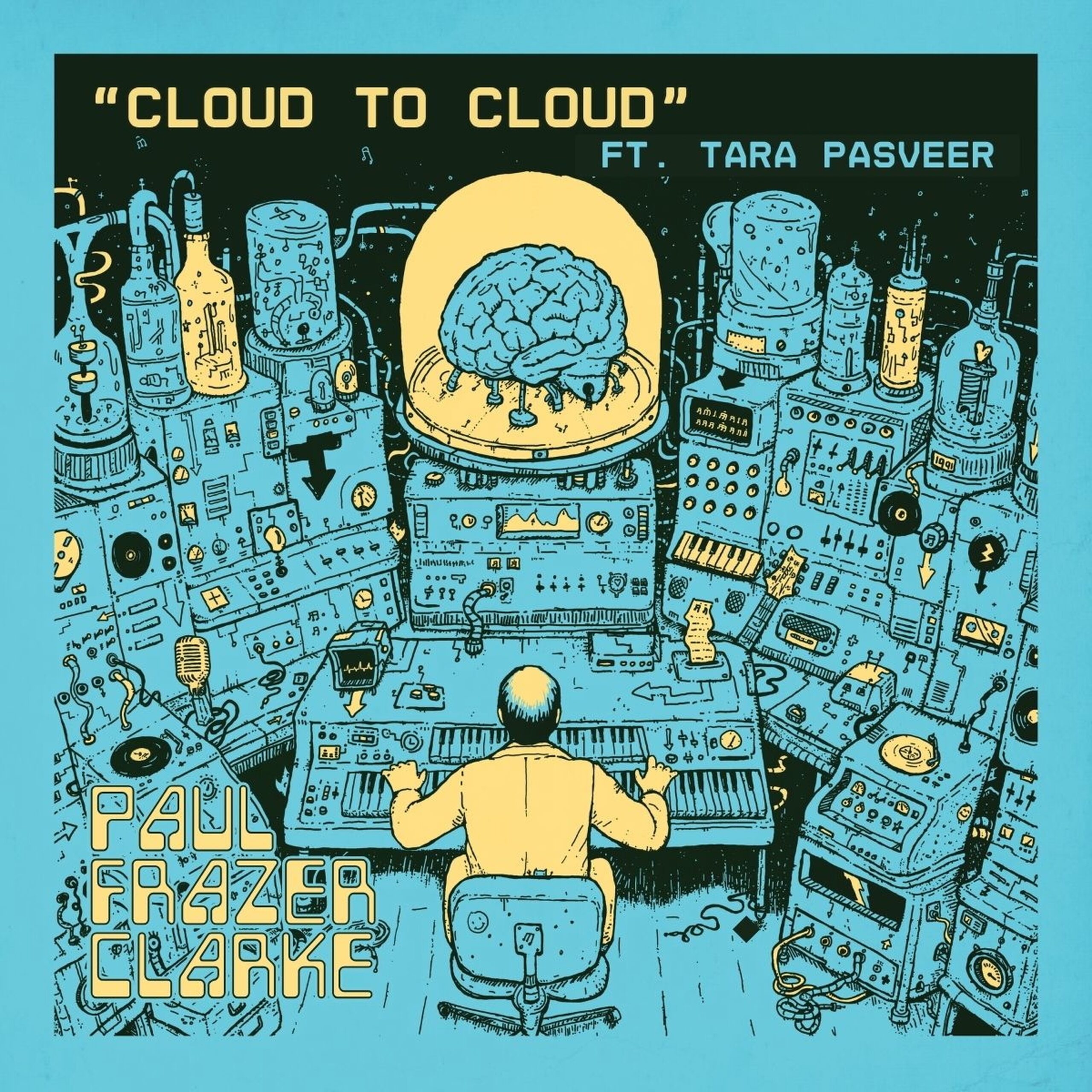
Q: The artwork for this project is wild—it’s this intricate, sci-fi cartoon illustration with a brain in a jar surrounded by walls of vintage studio gear. When you look at that visual, how do you feel it mirrors the actual music inside the EP?
A: The original artwork was created by the incredibly talented Dune Haggar for my 2024 album Backstories From A Soundtrack To Life. What I loved about it was that Dune did his research and came up with this amazing visual representation of me musically — but with a comedic edge too, which reflects the fact that I don’t always take myself too seriously. It resonated so strongly that it’s effectively become a personal brand — so I made the decision to carry it through to the EP releases in this blue variation. I think it does capture something real about the music — multiple influences, multiple sonic palettes, a lot going on beneath the surface. Hopefully when people see it they get a sense of the depth I try to bring to the work, whilst having a smile on their face at the same time.
Q: Tara has this fascinating habit of sometimes writing and singing in a completely invented language just to prioritize pure emotion over literal words. When you two were bouncing ideas back and forth for ‘Cloud To Cloud’, did that abstract, instinctual approach change the way you structured the track?
A: Not at all — I wanted to give her 100% creative freedom to express herself, and that was really the whole point of finding and working with an artist of Tara’s calibre. The last thing I wanted to do was constrain her approach. What she brought to the track was instinctive, deeply expressive and genuinely inspired — there’s an emotional intelligence in her delivery that goes beyond technique. You can’t manufacture that quality, you just have to create the right conditions for it and then get out of the way. That’s exactly what I tried to do, and what she gave back exceeded anything I could have scripted.
Q: With this EP dropping in quarters, plus the Retro Emotion project with Jeff Lorber and Chris Simmonds coming out later this year, you have a massive amount of music hitting the world. What does the roadmap look like for you for the rest of 2026?
A: It’s a genuinely busy second half of the year. The Five Coordinates EP continues with four more quarterly releases — each featuring a different international artist — running through to October 2026. Next up is “Cycle” featuring Will Champlin, son of Chicago legend Bill Champlin, dropping on 27th July, followed by “Perfect Stranger” featuring Theia in August, and “The Chalk Outline” featuring Charlie Grant in September.
Alongside that, the Retro Emotion album with Chris Simmonds lands in September on Cross Section Records — a project that’s been a long time in the making and one I’m really proud of.
There’s also The Halo Code — a gaming library album I’m developing with writer and producer Patrick Carré and vocalist Grace Lloyd, which we’re targeting at international gaming libraries and vertical production companies. That’s an exciting new territory for me and sits alongside my long-standing relationship with Sonoton Music.
And threading through all of it are a handful of back catalogue releases and SoundCloud drops that keep things active between the main campaign releases. It’s a full year — but that’s exactly how I like it.