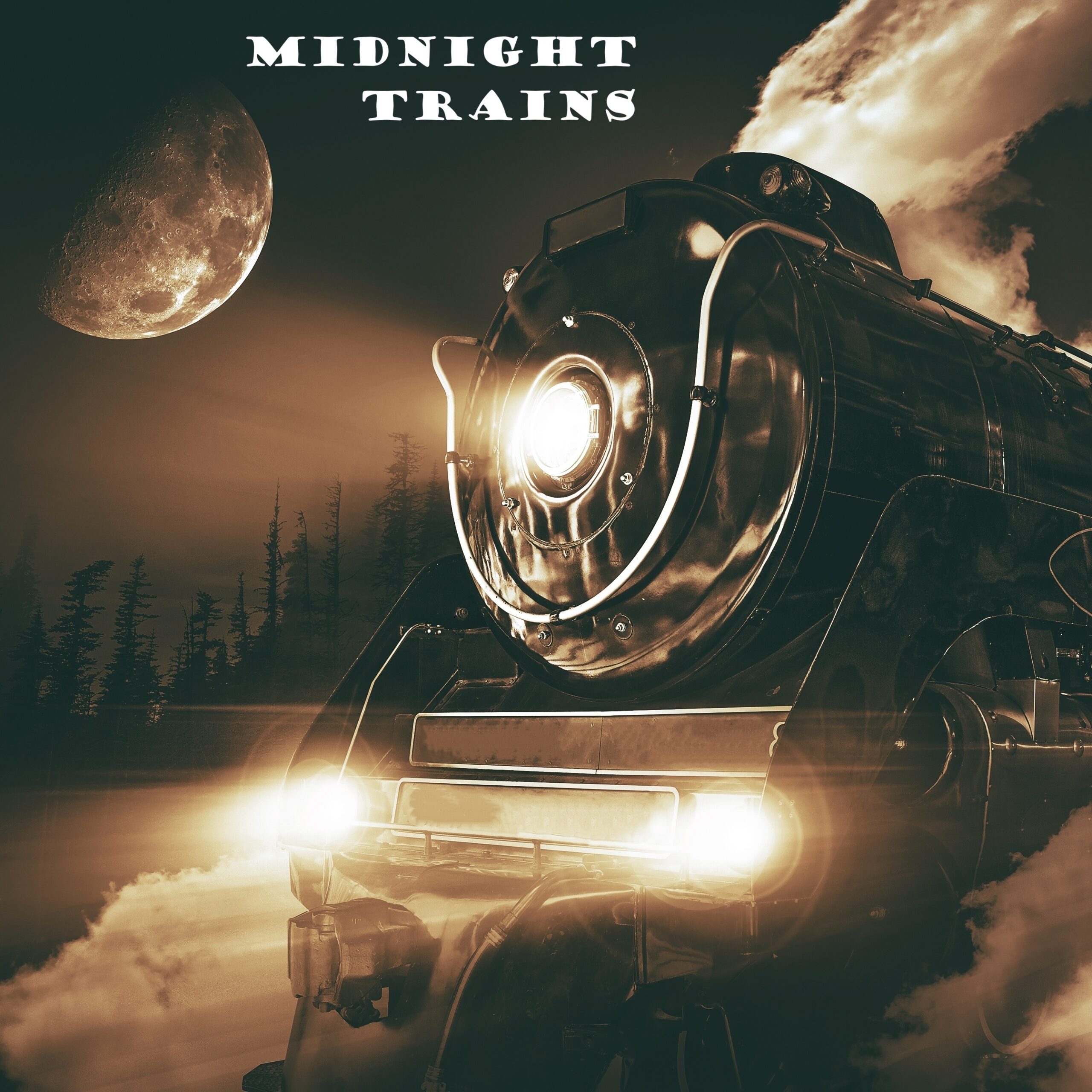
A Chat With Lior Golan About “MIDNIGHT TRAINS”
Q: Hi! You and Gabriel have been writing together for about 15 years now, going back to meeting up on the streets of Tel Aviv. When you two first sat down with guitars back then, what was the moment you realized, “Okay, we actually have a really rare creative flow together”?
HEY! Well we met through a mutual friend, Keshet, he was a guitar player and him and Gabe had a band called Havenbound, he was the one who first saw the connection,
i was road tripping in new zealand with him for a while, and clearly he was right, the second me and Gabriel met, the flow was so cool, and all expectations were met, i just played some riff and harmonies that i liked,in loops, while gabe sat with a pen and a book, putting down mighty lyrics that just hit the spot with truth, essence, and resonated with the relevant riff/harmony.
Q: Pulling off a heavy, English-language rock project in Tel Aviv definitely comes with its own set of hurdles. What kept that specific vision alive for you guys through all the different lineup changes and shifts over the years?
You damn right its hard, but for me and Gabe there was no other option, we had a desire, in our hearts, to do rock music, on which we really grew on, and we both speak english pretty well, and living it, in my opinion you can’t make decent Rock music in any other language, English rolls well on the tongue, much more circled than Hebrew, as a matter of fact there are a few good Hebrew rock bands here in Israel, and they are doing well, but it’s not my cup of tea, i still love all the great bands that founded rock and the great players, singers, composers and producers that made this Genre of Freedom so huge and mighty.
Q: I know these five tracks actually sat on your laptop for about four years before finally seeing the light of day. What was the exact moment or spark that made you say, “It’s time to get this out into the world now”?
Well that’s a good & intimate question, actually when we got to record this e.p. It was after the 4th line up that collapsed, after quite a time of rehearsals and small bars shows, it was during the “Corona pandemic” – everything was closed, it looked like the end of the world was coming, and i was having some really hard times, as my repressed C-PTSD was emerging, and i felt weak, and had serious DRUG ABUSE, and under a certain and most valid economic pressure, we just finished the recording, did the mixing process, than mastering, and i started to treat my problems, doing recovery and rehabilitation, that is still going to this day, so all of the above just took my attention away from me for a long while, and i’m finally free to do it. But in the last two years I’ve been working on solo Projects, and i got two new albums coming out, around October, a house music album, a bit psychedelic, and an ambient-rock album, which will be Called “Requiem for NOVA”, we had a tremendous tragedy here in Israel, and I have lost my dear sister, Shirel, which i loved so much, and was a good friend and a pure soul. That also overwhelmed me and I’ve been devastated since then. It was just that the time was right and resources were there so we could publish the project. I also feel more focused and clear in mind so I can really put the work in.
Q: You can really feel that raw, live-in-the-room energy on the EP. I heard you recorded the bass and drums simultaneously at Shardo Studio—how much did tracking together live shape the overall weight and attitude of the final sound?
In my opinion as me & Gabe grew on the greatest rock bands such as Led Zeppelin, Black Sabbath, Deep Purple and such who’s recording method was mostly live and in this genre it is crucial to capture the kinetic energy so the least we could do is to record rhythm simultaneously producing a raw, live sound. I don’t see any other way to make rock music.
Q: Niv Hovav’s keyboard work—from the Hammond to the synths—adds such a rich, classic texture to the project. How did those layers come together once the core rhythm tracks were locked down?
You damn right it does. Actually it was a pretty magical process with him, as he wasn’t on any of the linups prior to recording. We had serious problems with that position, Niv came along as i found him on the web and the click between him and the rest of the band was instantaneous. He’s a remarkable player and a great guy, who also sings pretty well. And we never had to direct his playing because he connected with the music and came up with brilliant parts.
Q: Writing music often serves as a way to process the heaviest things we carry. For you personally, was writing these songs more about escaping reality in the moment, or was it about facing things head-on to find some healing?
I think both, in my case. It works both ways, as they say. Gabe adds that for him writing these lyrics and melodies was a process of facing hardships, especially on “Cruel Wind”.
Q: There’s a line from “You Tried Your Best” where you sing about coming from distant stars to share a light. When you listen back to that track today, how does that message hit you now compared to when you first wrote it?
That’s a really good question. As I look back it seems like an obligation I took on myself. Like a command I tried to fulfill every day in my way of life.
Q: You’ve described this EP as a kind of unfiltered medicine for anyone dealing with their own darkness. What do you hope someone going through a tough time takes away after hitting play on MIDNIGHT TRAINS for the first time?
I guess that we want listeners to resonate with the music and find it healing to them. We hope our music brings hope and joy to people going through tough times. While some songs might appear rather dark we hope the general message is one of hope. Lior adds that music for him is a place of healing, gaining energy and transforming into a better version of oneself. Lior still listens to albums, almost daily. If we can provide comfort, or gain a place in someone’s heart, that’s a job well done.
Q: Beyond the music itself, having your own dedicated studio space now gives you a completely different level of freedom. How has having that personal setup changed your daily workflow and the way you’re approaching new ideas compared to how you used to write?
Having my own studio is definitely a new stage in my life, and my career. The flow is much better, I’m now a producer and recording tech, not just a musician. I got solo projects on top of midnight trains to be released soon.
Q: Now that MIDNIGHT TRAINS is officially out in the world and off your laptop, what is next for you and Gabriel for the rest of this year? Are you already diving into the next batch of unreleased tracks?
We sure are. We got other songs that we will shortly start working on, hopefully starting this November. Some are songs from our past, some will be new. Thanks for this lovely interview.